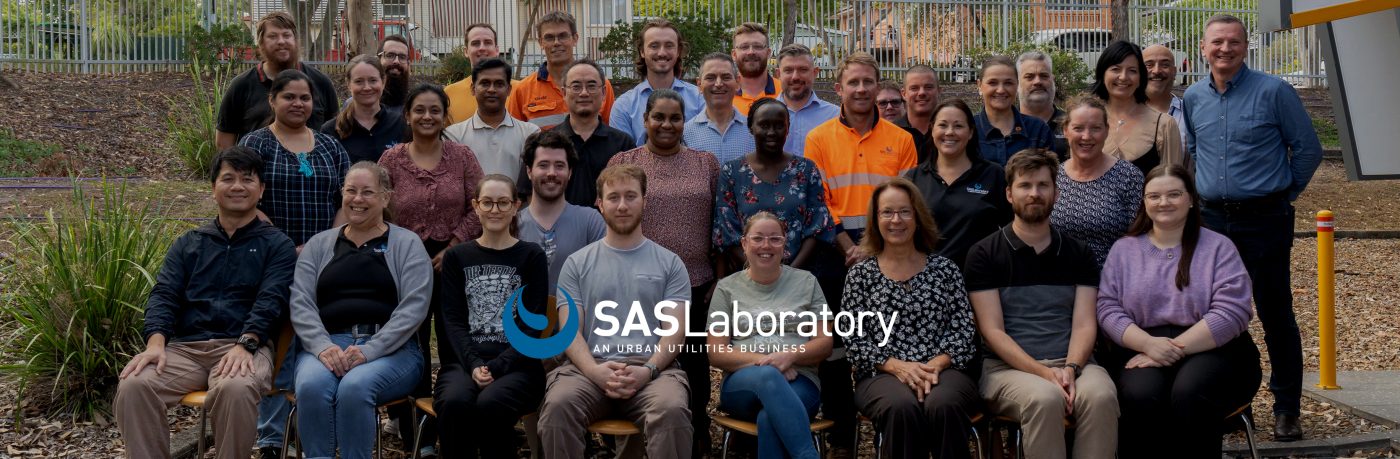
On 24 April 1996, the SAS Laboratory at QLD Urban Utilities began its accreditation journey. Three decades later, their commitment to quality, credibility and confidence continues to define how the laboratory operates and how its results are trusted.
As a specialist scientific testing facility supporting water, wastewater and environmental monitoring, the SAS Laboratory plays a critical role in decision‑making across utilities, councils, industry and environmental organisations. Every analysis delivered whether for operational control, regulatory compliance or environmental protection depends on one core requirement: results that can be relied upon.
The laboratory is NATA‑accredited to ISO/IEC 17025, covering a broad scope of testing including metals, nutrients, microbiology, organic compounds, air quality monitoring and field sampling. Accreditation provides independent assurance that these results are technically sound, scientifically valid and produced under robust quality systems.
From the outset, accreditation was viewed not as a box‑ticking exercise, but as a strategic investment. As demand for independent, defensible testing grew, accreditation offered a clear and credible way to demonstrate that the laboratory’s work met strict national and international standards. It aligned methods with globally recognised best practice and embedded rigour at every stage from sample collection through to final reporting.
That focus on discipline and consistency proved essential as the laboratory evolved. When it became part of Urban Utilities in 2012, its analytical and consulting capabilities expanded significantly. Despite changes in scale and scope, accreditation remained central. It continued to provide assurance to customers, regulators and stakeholders that the laboratory’s people, systems and methods met the highest standards of scientific practice.
For customers, the value of accreditation is practical and immediate. It builds confidence that data is accurate, traceable and suitable for critical decisions. It reduces uncertainty, supports compliance, and ensures results can withstand scrutiny when it matters most.
Maintaining confidence requires continual effort. Accreditation demands ongoing training, regular assessment and a culture of continuous improvement. Over time, this has strengthened internal capability, sharpened processes and reduced risk—delivering benefits well beyond compliance alone.
Accredited laboratories also raise the bar for the wider system. High‑quality data underpins stronger environmental regulation, better long‑term planning and more informed decision‑making across the water and wastewater sector. In this way, the SAS Laboratory’s commitment to accreditation contributes to outcomes that extend far beyond its own walls.
Reflecting on three decades of accreditation, the SAS Laboratory points to staff engagement as a key driver of success. Involving people early, building understanding of the process, and fostering a sense of ownership has helped embed quality into everyday practice. Equally important has been an open approach to feedback using insights from NATA assessments not as criticism, but as opportunities to strengthen systems and lift performance.
Accreditation is not a one‑time achievement. It is a framework for sustained excellence—one that requires commitment, adaptability and continual learning.
For the SAS Laboratory, that framework has delivered tangible results: three decades of trust within the team, with customers, and across the broader community. As the laboratory looks ahead, accreditation will continue to provide the benchmark that underpins scientific quality, technical integrity and confidence in the results Australians rely on every day.
Learn more here