In August 2026, APV Engineering & Testing Services (APV) marks an extraordinary milestone: 60-years of continuous NATA accreditation.
For six decades, accreditation has underpinned APV’s commitment to quality, safety and technical excellence, supporting specialist testing and evaluation (T&E) services for some of the world’s leading automotive, defence, transport and mining organisations.
The story began in 1959 when APV’s sister company, APV Safety Products, started manufacturing seatbelts for the Australian automotive industry. That same year, Volvo made history by releasing the patent for the three-point seatbelt, a breakthrough that transformed vehicle safety worldwide.
Building on this legacy, APV developed the D210 Automotive Retractor in Australia. By the 1980s, it had become the benchmark standard across South-East Asia through Autoliv, helping to improve vehicle safety on a global scale.
This lifelong focus on protecting lives drove APV to seek NATA accreditation in 1966. The goal was clear: independently benchmark its testing capabilities and provide customers with confidence in the quality and reliability of its services. Today, that commitment remains as strong as ever.
Over the years, APV’s capabilities have expanded significantly. What began as an internal quality assurance function has evolved into a world-class T&E operation delivering services directly to automotive OEMs, defence organisations and manufacturers across the globe.
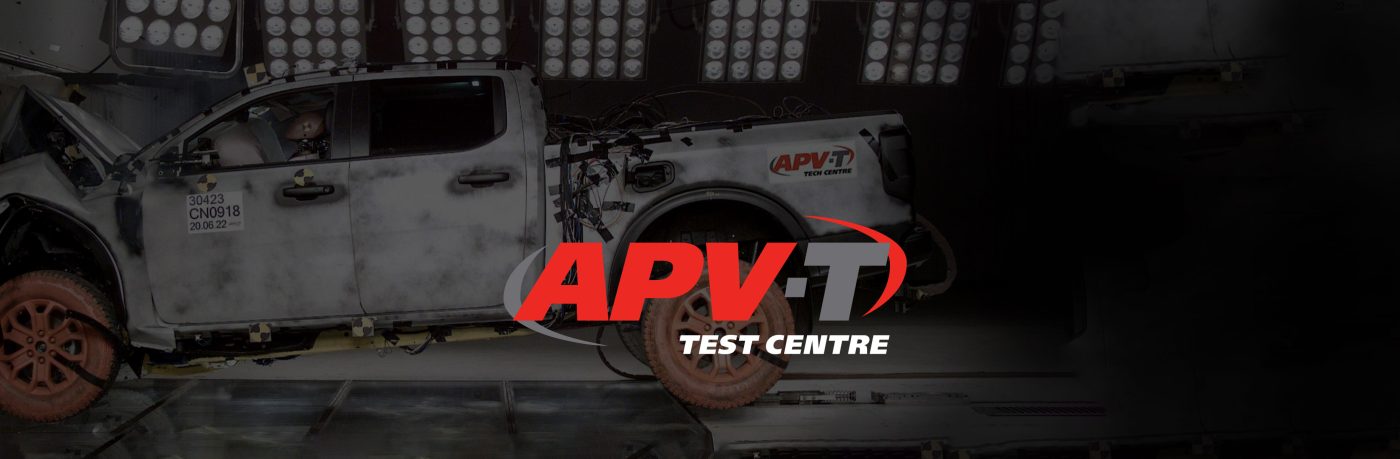
APV now undertakes full vehicle development programs, high-speed photography and data acquisition for military projects, environmental and vibration testing, and advanced seating and restraint evaluations for international clients, including projects as far afield as Argentina.
As its services have evolved, so too has its accreditation scope, providing customers with trusted assurance that APV’s facilities, people and processes meet internationally recognised standards.
Looking ahead, APV is embracing the next frontier in testing and evaluation. The organisation is investing in advanced simulation and virtual testing technologies that complement traditional physical testing, creating new opportunities to improve efficiency, capability, and confidence in product development.
APV sees significant potential for accreditation to support this evolution, particularly as simulation-based testing becomes increasingly important across automotive, defence and industrial sectors. Combining virtual testing with physical validation has the potential to reshape the future of T&E, enabling more comprehensive and cost-effective assessment programs.
As APV celebrates 60 years of accreditation, its partnership with NATA remains central to its mission: delivering trusted testing, driving innovation, and helping make products safer for industries and communities around the world.