Assessments are built around checking.
Assessors observe, question, listen and look closely at the evidence in front of them. It comes with responsibility, professional judgement and the expectation to remain objective and impartial.
But on R U OK? Day, perhaps we can turn that lens around.
For many assessors, the job means frequent travel, unfamiliar environments, nights away from home and family, changing schedules and moving from one assessment to the next. Then there is the assessment itself, meeting different people, navigating difficult conversations and making decisions that matter.
And like everyone else, assessors have a life beyond their work.
Health, family, finances, relationships, career changes, personal responsibilities, everyone has a life situation. We rarely know what someone may be carrying with them when they walk into an assessment.
Of course, stress can exist on the other side of the table too.
Being assessed means preparation, scrutiny and uncertainty. There may be pressure from colleagues or management, concern about findings, and weeks of work leading up to a relatively short period with an assessor.
There are people on both sides of every assessment.
Perhaps that is something worth remembering in an industry where we are trained to notice when things aren’t quite right.
R U OK? Day reminds us that we can use that instinct beyond our technical work. Not to assess someone’s mental health, we don’t need to be experts to care, but simply to notice, check in and listen.
At NATA, looking after wellbeing can also take practical forms. A nine-day fortnight can create more time for life outside work. Flexibility can help when personal circumstances need attention. And sometimes support is as simple as a colleague recognising that today might not be your best day.
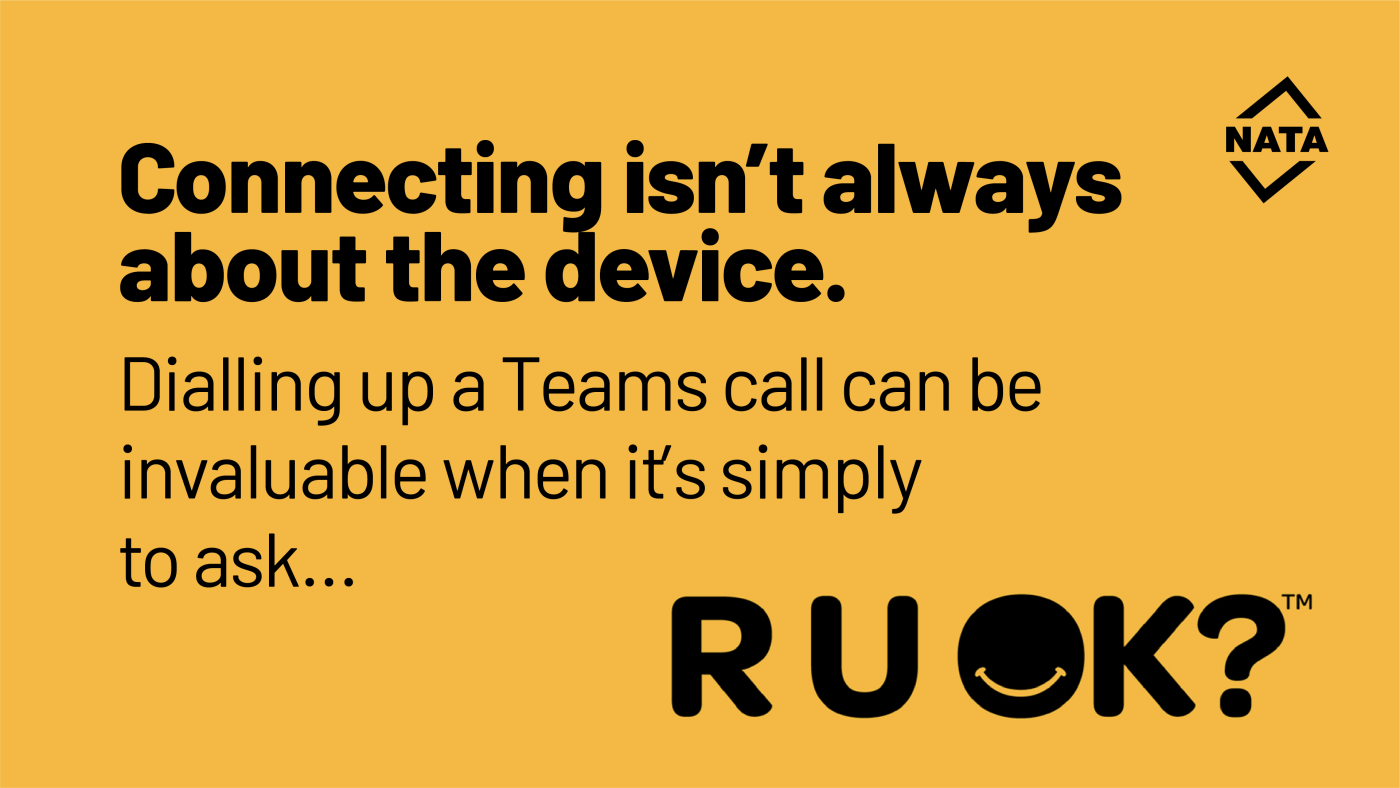
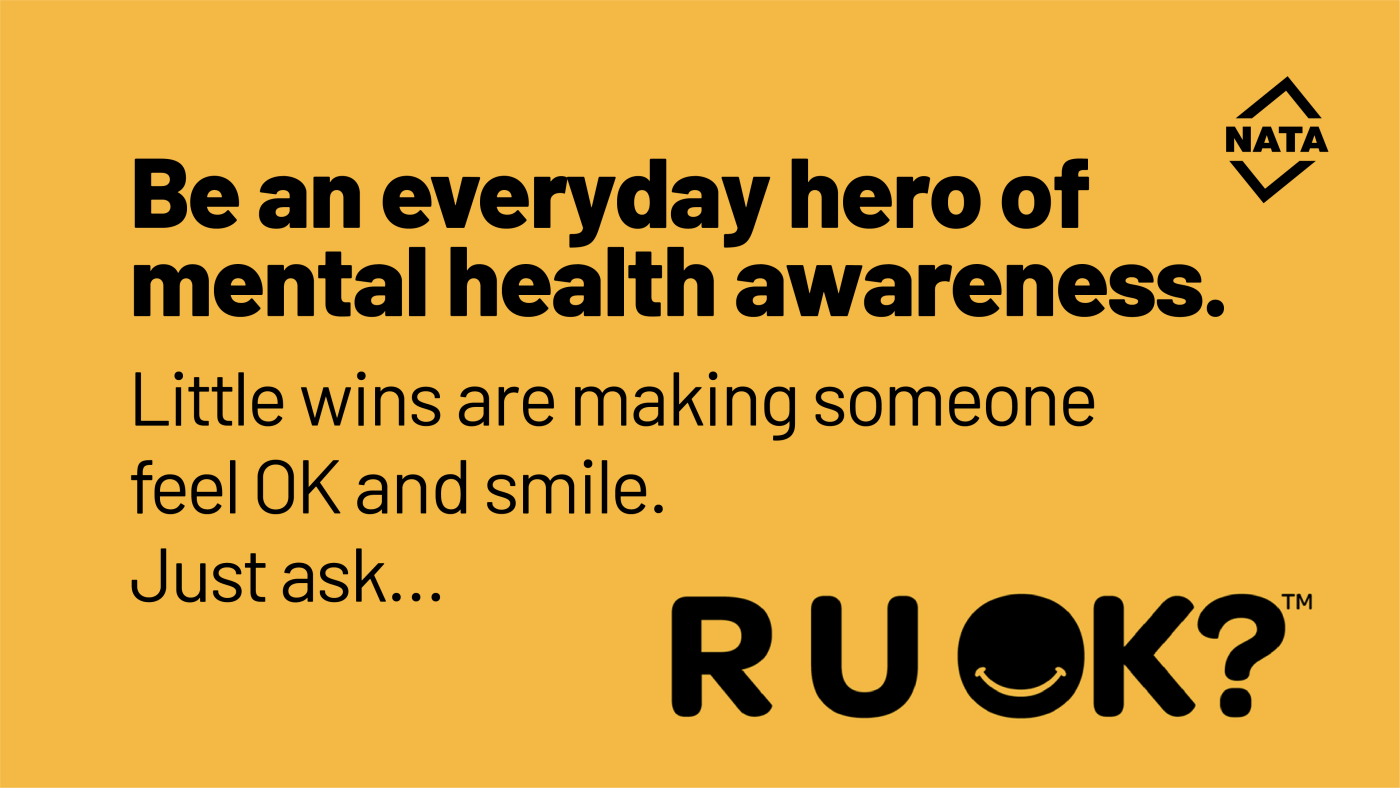
That same thinking sits behind our NATA desktop screensavers for R U OK? Day campaign this year: small reminders to do a regular check-up on your colleagues, make that Teams call or simply ask someone how they are going.
Start with yourself. Then the person beside you. The assessor on the road. The person being assessed. The colleague you haven’t spoken to lately.
Because when one person starts checking in, another may do the same. Care has a way of travelling and perhaps that’s one kind of checking we’d like to see spread throughout our industry.
We spend our working lives asking questions and looking for what might otherwise go unnoticed.
This R U OK? Day, let’s remember to notice the people too. And most importantly, ask: “Are you OK?”
For more information on R U OK? Day , please visit: https://www.ruok.org.au/