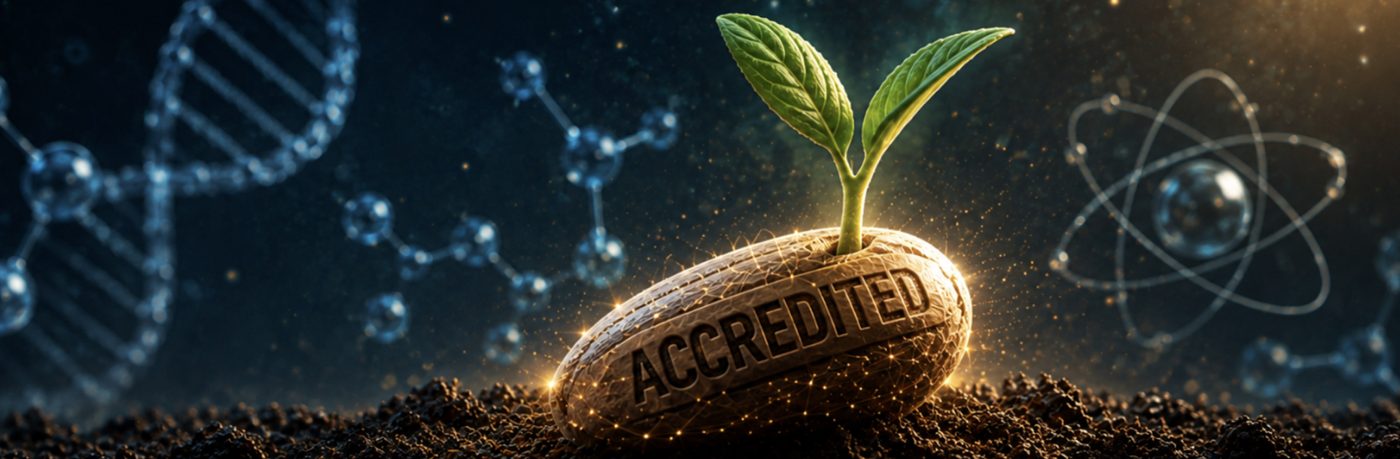
A tiny seed rarely hints at what it will become. Buried beneath the soil, it quietly begins a journey of growth. It sprouts, shaped by the right conditions, nurtured over time, and eventually bears fruit that can sustain communities, improve lives, or even change the world.
Science often begins the same way. Every breakthrough starts with a simple question. What if? Why? How? A moment of curiosity becomes an idea. It then becomes years of observation, experimentation and evidence. Over time, those small beginnings can grow into discoveries that reshape the way we live.
Australia has long been a nation where seeds of curiosity have flourished. Howard Florey’s work transformed penicillin from an accidental discovery into the world’s first practical antibiotic, saving millions of lives. CSIRO researchers developed technology that helped make Wi-Fi a global reality. Professor Ian Frazer’s work on the HPV vaccine changed the future of cervical cancer prevention. The cochlear implant gave the gift of hearing, while innovations such as the flight recorder, spray-on skin and the Heart in a Box continue to improve and save lives every day.
Some seeds grow in laboratories. Others grow from Country.
For more than 65,000 years, First Nations peoples have cultivated a deep scientific understanding of Australia’s landscapes, plants and ecosystems. Today, that knowledge continues to shape modern science. The work of organisations such as the Northern Australia Aboriginal Kakadu Plum Alliance (NAAKPA), led by Paul Saeki, demonstrates how Indigenous knowledge, research and innovation can come together to unlock the remarkable properties of native foods while creating opportunities for Aboriginal communities. It is a reminder that science is not owned by one discipline or one generation. It grows through shared knowledge, careful observation and a willingness to keep learning.
Yet behind every breakthrough is another story that is rarely told. Long before a discovery becomes part of everyday life, it must earn something far more valuable than recognition. It must earn trust.
Every medicine must be proven safe. Every material must perform as expected. Every engineering design must withstand scrutiny. Every measurement must be repeatable. Every result must be supported by evidence.
This is where NATA accreditation quietly becomes part of the story, because accreditation and science have always belonged together. Both are guided by the same principles. Evidence. Competence. Measurement. Repeatability. Continual improvement. These are the questions NATA’s Lead Assessors and Technical Assessors ask every day, building confidence that laboratory results are not simply claimed, but demonstrated through sound scientific practice.
Across Australia, NATA’s Lead Assessors and Technical Assessors apply these principles every day. Their expertise extends across the diverse services NATA accredits, including biobanking, inspection, proficiency testing, sleep disorder services, reference materials, respiratory testing, as well as laboratories undertaking chemistry, pathology, microbiology, engineering, calibration, materials science, physics, food science and many other scientific disciplines. Working together, they assess not only compliance with standards, but also the competence of the people, processes and systems behind every result.
It is a role driven by curiosity as much as expertise. Every assessment begins with questions, follows the evidence and seeks confidence in the answers. While scientific discoveries often capture the headlines, it is the quiet work of these professionals that helps ensure the results we use every day are accurate, reliable and trusted.
National Science Week reminds us that science is not confined to research institutes or university laboratories. It is present in the water we drink, the food we eat, the roads we travel, the technologies we use and the healthcare we depend upon. It quietly shapes everyday life, often in ways we rarely stop to notice.
The same can be said of NATA accreditation, which helps build confidence in the products, services and systems Australians rely on every day, ensuring what is tested, inspected and calibrated has been assessed with rigour, competence and impartiality.
At NATA, we see these seeds of science every day through the work of accredited facilities, technical experts and assessors who help ensure scientific results can be trusted not only in the next invention or breakthrough, but in every curious mind that dares to ask, “Why?” and, even more boldly, “Why not?” Some will become researchers, others will become engineers, chemists or pathologists.
Some may one day bring that scientific rigour and expertise to NATA accreditation as Lead Assessors or Technical Assessors, helping ensure science continues to earn the trust of the communities it serves.
Because while discoveries shape the future, it is trust that allows them to change the world.
Perhaps that is the greatest reminder this National Science Week that science is all around us. Sometimes we see it in remarkable discoveries, other times, it quietly works behind the scenes, improving lives in ways we rarely stop to notice. Whatever form it takes, we all rely on the scientists and the science that continue to shape a safer, healthier and better world.
Happy National Science Week!